To mark International Day of Women and Girls in Science, Technology, Engineering and Mathematics (STEM), we spoke with a group of inspiring women who are pursuing research and driving innovative tech solutions across TFRI and its programs.
In this Q&A, they share their journeys, what motivates them and their insights on how to encourage more women and girls to pursue and thrive in these fields.
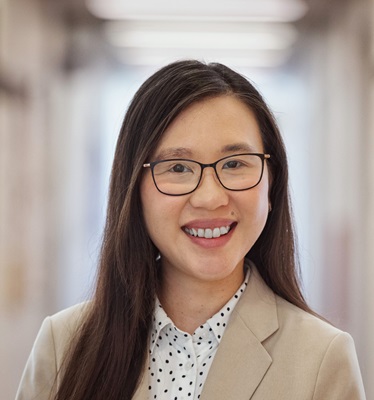
Dr. Emilia Lim
Dr. Emilia Lim completed her training in cancer genomics and bioinformatics and now, as a Terry Fox New Investigator, studies how air pollution disrupts the molecular biology of the lungs to drive cancer.
Lung cancer is the leading cause of cancer-related death. Second only to smoking, air pollution is a major risk factor for this disease. Dr. Lim aims to understand how air pollution dysregulates the lungs in order to identify new ways to prevent lung cancer.
What do you love about working in STEM, and what brings you the greatest satisfaction or joy?
What I love most about working in STEM is the opportunity to use the latest technologies to answer questions in health and disease and ultimately discover things that help us live healthier, more fulfilling lives. Importantly, these discoveries cannot be made in isolation and involve large team efforts, where everyone plays a role in ensuring the success of a project.
I get the greatest satisfaction and joy from working with large teams of biologists, bioinformaticians, clinicians, patient partners and administrators toward a huge goal, supporting each other through triumphs and failures. I truly believe that teamwork makes the dream work!
What advice would you give to your younger self about pursuing a career in science?
Plan, but don’t worry. It is in my nature to worry a lot about the outcomes of my endeavours, and I probably wasted too much time on this. I would advise my younger self to focus less on worrying and more on strategic planning, and not to be afraid to reach out to senior mentors for guidance and advice. Sometimes the best opportunities are cloaked in adversity, and those who have travelled the road before us are often well placed to help us discern what our next steps should be.
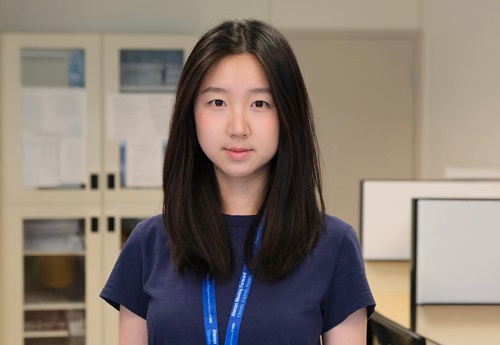
Yahan Zhang
Yahan Zhang is a holder of a Marathon of Hope Cancer Centres Network’s (MOHCCN) Health Informatics & Data Science Award. Her research focuses on advancing the use of non-invasive biopsies in cancer treatment through computational approaches. Specifically, she aims to use machine learning to replicate the insights currently obtained through invasive tissue biopsies. Her goal is to provide scientists and clinicians with real-time measurements of gene activity throughout the course of disease, reducing the turnaround time from diagnosis to treatment initiation.
What do you love about working in STEM, and what brings you the greatest satisfaction or joy?
I love the analytical challenges and constantly evolving nature of STEM. Beyond the technical work, my greatest joy comes from collaborating with passionate experts and staying on the cutting edge of AI and cancer research. There is nothing more satisfying than seeing our theoretical work translate into real-world clinical tools that directly impact patient care.
Who or what inspired you to pursue a career in scientific research?
My pivot to a career in science happened during my final year of undergrad, when a human genomics course introduced me to liquid biopsy. Having watched my own family battle cancer, I was deeply moved by the potential of this technology to lessen the suffering I had witnessed firsthand. Realizing that science could directly improve the patient experience gave my work clear purpose and officially began my journey.
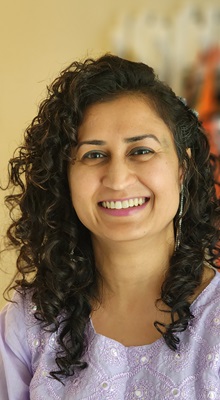
Pankhuri Gupta
Pankhuri Gupta is a Technical Product and Delivery Lead for TFRI’s Digital Health & Discovery Platform (DHDP), where she helps teams deliver complex, data-driven systems that are reliable and user-focused. Over the years, she has worked as a software developer, QA lead, business analyst and scrum master, giving her a broad perspective on both the technical and business sides. She focuses on aligning technical solutions with business goals, ensuring teams collaborate effectively and supporting decisions with clear information. Pankhuri enjoys connecting these pieces so that technology can truly support people and outcomes.
What do you love about working in STEM, and what brings you the greatest satisfaction or joy?
I enjoy problem-solving and learning new things every day. The most satisfying part is seeing a project come together and knowing I’ve helped teams deliver solutions that work. I also enjoy guiding teams, whether it’s clarifying requirements, improving processes or mentoring someone in their growth. Being able to combine technical understanding with leadership and see real impact is what motivates me.
How do you think we can get more women and girls involved in STEM?
I think more women and girls will pursue STEM if they see it as something they can do, even when it feels challenging. Mentorship, early exposure and opportunities to take responsibility help build both confidence and interest. Letting girls and women try things hands-on, ask questions and learn from mistakes makes STEM feel possible.
Workplaces that support growth and allow women to take on both technical and leadership roles help them gain confidence and inspire others to follow.

Dr. Jeanette Boudreau
Dr. Jeanette Boudreau is a former Terry Fox New Investigator, a principal investigator in a Terry Fox New Frontiers Program Project Grant, a member of the MOHCCN’s Atlantic Cancer Consortium and a new member of TFRI's Board of Directors. Her research program focuses on understanding how the immune system engages with cancer, both on its own and in response to standard treatments. She is particularly interested in how one type of cell, called a natural killer (NK) cell, can be used as immunotherapy. Her lab studies what makes NK cells contribute to cancer control and is developing approaches to leverage these insights as an off-the-shelf cellular immunotherapy.
What do you love about working in STEM, and what brings you the greatest satisfaction or joy?
I love the discovery and freedom that come with working in STEM. Every day, I get to be creative and optimistic while asking questions. I really like working with trainees and patient partners because we can go farther together. It makes our work better and certainly much more fun!
What is one small, realistic change you’ve seen – or wish you’d seen – in a STEM classroom or workplace that could make it easier for women or girls to stay and succeed?
When I was in training, I noticed that the proportion of women decreased at higher levels of leadership and training. There were fewer women in senior and leadership roles, but as efforts to support and include women have matured, I now have more female role models than ever before, and I see more women choosing to pursue careers in STEM.