The Terry Fox Research Institute has invested $3.5 million into the next generation of cancer research leaders through the 2026 Terry Fox New Investigator Awards. Seven emerging researchers across Canada will receive up to $525,000 over the next three years to build their independent research careers and pursue bold ideas. This marks the largest investment in this competition to date.
These awards will advance innovative research, inform health policy and drive improvements in care for patients facing lung, breast, ovarian and childhood cancers, as well as meningiomas, the most common brain tumour in adults.
These awards are made possible through donations raised by the Terry Fox Foundation, with one award this year also supported by the River Philip Foundation.
“To advance our understanding and treatment of cancer we need to continuously seek, attract and support the best minds,” says Dr. Jim Woodgett, TFRI President and Scientific Director. “These awards give talented young scientists the chance to build and keep their programs here in Canada and pursue bold ideas at a vulnerable stage in their careers. We’re incredibly grateful to our donors and partners for making this investment in the future possible.”
Notably, Dr. Miffy Hok Yan Cheng was named this year’s Dr. Victor Ling Terry Fox New Investigator. Named after TFRI’s founding president and scientific director, this award distinguishes the highest-ranked Terry Fox New Investigator of the year.
“I feel very fortunate to be supported by this Terry Fox New Investigator Award so we can continue working to create more precise, effective and affordable treatments for patients who currently have limited options,” says Dr. Cheng.
The 2026 Terry Fox New Investigator Award recipients are:
British Columbia
Dr. Miffy Hok Yan Cheng (University of British Columbia)
Dr. Cheng and her team will develop a new approach to remove the dense, protective barrier around tumours, allowing advanced immunotherapies to reach and treat cancer more effectively.
Dr. Samantha Pollard (Simon Fraser University & BC Children’s Hospital Research Institute)
Dr. Pollard will work with patients, families, healthcare providers and healthcare decision makers to expand access to genetic testing for children with cancer.
Dr. Katey Enfield (BC Cancer Research Institute)
Dr. Enfield and her team aim to understand why immunotherapy is only effective for some patients, with the goal of identifying new biomarkers to guide more effective lung cancer treatment.
Ontario
Dr. Farshad Nassiri (Princess Margaret Cancer Centre, University Health Network & University of Toronto)
Dr. Nassiri will use computational and molecular biology to better predict when meningiomas, the most common brain tumour in adults, are most likely to return after surgery, helping doctors tailor treatment and improve patient outcomes.
Dr. Bowen Li (University of Toronto & Princess Margaret Cancer Centre, University Health Network)
Dr. Li’s team will develop a programmable mRNA nanomedicine to detect cancer cells and trigger them to self-destruct, leaving healthy tissue untouched.
Dr. Daniel Myran (Bruyère Health Research Institute & North York General Hospital)
Dr. Myran’s team will launch the largest study to date on the association between cannabis and cancer risk in Canada, generating critical evidence to guide public health policy and decisions around personal use.
Quebec
Dr. Hannah Garner (McGill University)
Dr. Garner will investigate why the immune system doesn’t destroy BRCA1-related breast and ovarian tumours and explore how to reprogram it against these aggressive cancers.
About the Terry Fox New Investigators
The Terry Fox New Investigator Awards provide research operating grants to support future leaders as they develop their independent careers in cancer research. The award provides a single research grant of up to $525,000 for three years to investigators within the first five years of a first faculty-level appointment in Canada.
Learn more about the Terry Fox New Investigator Awards.
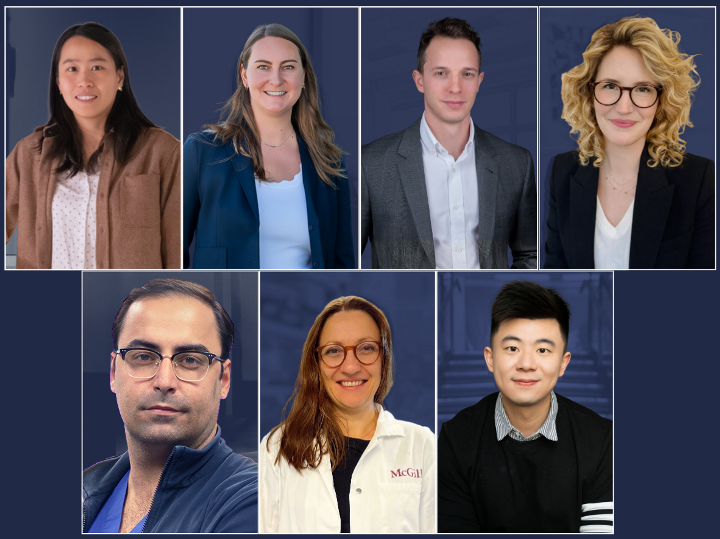
Top Row: Drs. Miffy Hok Yan Cheng, Katey Enfield, Daniel Myran, Samantha Pollard
Bottom Row: Drs. Farshad Nassiri, Hannah Garner, Bowen Li